
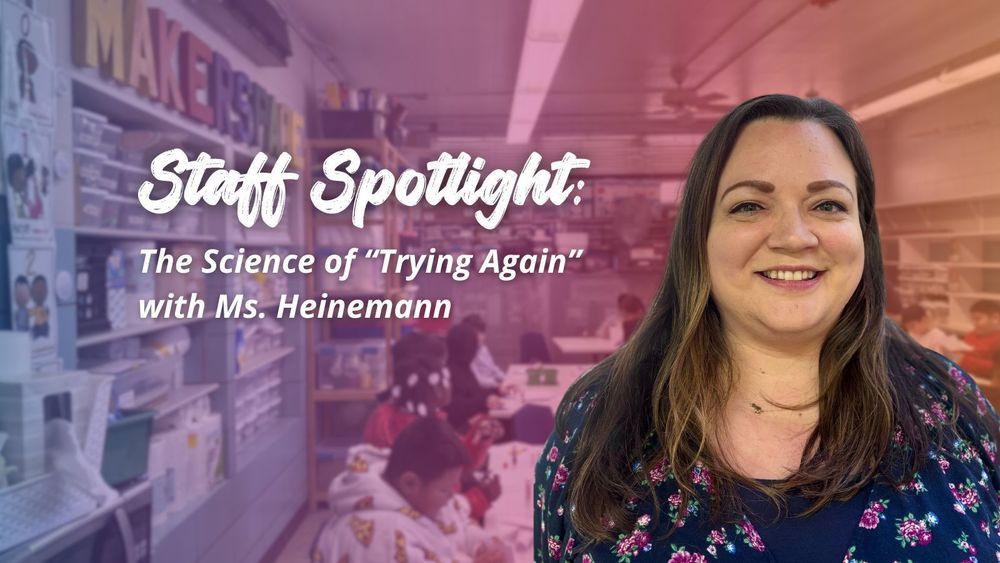
“Good morning, my most amazing makers!” It’s a greeting that cuts through the hum of a 3D printer, the smell of a middle school baking project, and the steady snip of cardboard saws. This is the sensory soundtrack of the CICS Irving Park Makerspace, and at the center of the creative flurry is Makerspace teacher Beth Heinemann. Ms. Heinemann’s goal is to cultivate a "safe-to-fail" environment where a collapsed marble run or a cracked egg drop is seen as a badge of progress. Through hands-on exploration, she is a champion of second chances, proving that one of the most important things a student can build is perseverance.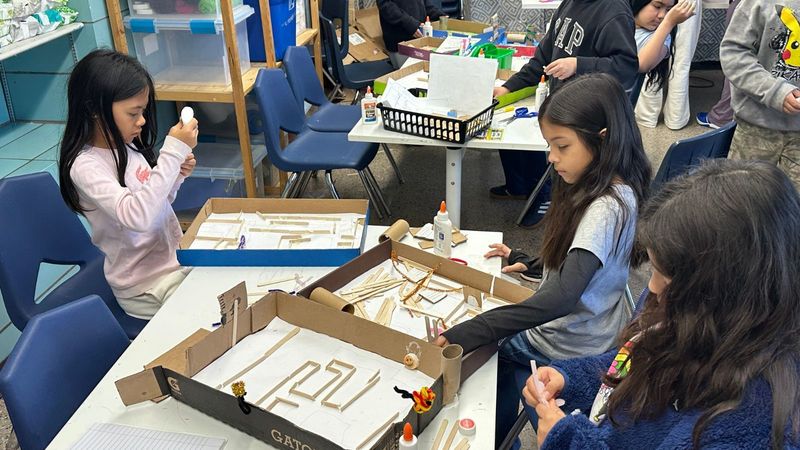
Ms. Heinemann’s tenure at CICS Irving Park has spanned multiple grades and roles, giving her a rare, bird's-eye view of student growth. "It’s a big family here," she shares. "I’m now teaching the younger siblings of students I taught years ago! There’s a level of trust and continuity at CICS Irving Park that you don’t find everywhere."
That community spirit extends to the school’s leadership and parents. The Makerspace itself is largely fueled by the supportive Puma PTO (Parent-Teacher Organization), granting Ms. Heinemann’s class the creative freedom to build a curriculum that evolves with the students' interests and provides them with high-quality STEM resources.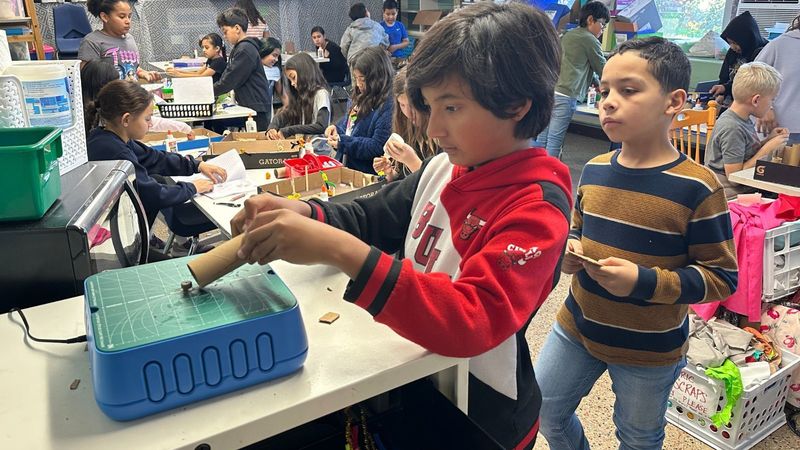
From 3D printing to culinary chemistry, the Makerspace bridges the gap between abstract concepts and tangible results, combining STEM-related principles to their problem solving. With a new 3D printer this year, older students are learning the end-to-end process of digital design, creating custom keychains and components. Students tackle engineering challenges with projects like the Slowest Marble Run, using hot glue "speed bumps" and friction-adding materials to defy gravity for longer than 10 seconds. Younger makers explore polar biology by building structures designed to keep a person warm, while middle schoolers dive into the chemistry of baking, measuring the right amounts for a desired—and delicious—reaction. “Students are developing real life skills in my class where they get to figure it out; it’s incredible to watch them take that independence and run with it,” Ms. Heinemann explains. “After going through a sewing unit, I now have students that will come in asking for a needle and thread to fix a hole in their shirt.”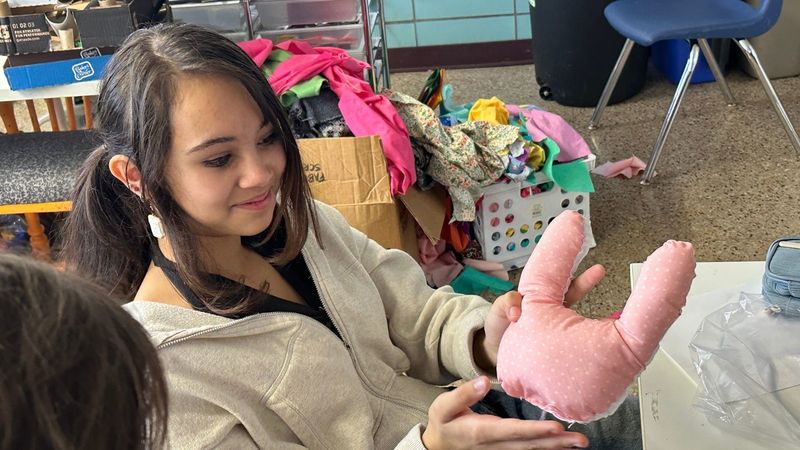
These skills help apply traditional classroom practices into real-world problems that require critical thinking, teamwork, and perseverance—the capacity to try again. Ms. Heinemann has intentionally built a culture where failure is a data point, not a defeat. She recalls a student who joined her in 2nd grade, often moved to tears by the slightest setback. "Now, he’s a 6th grader. He can keep trying without the tears. He knows that if it doesn’t work the first time, he isn't going to get an ‘F.’ He’s learned that failure is exactly what engineers do—they reiterate."
Every class begins with a simple, grounded mantra: I will be kind, I will be safe, I will try my best. By removing the fear of being "wrong," Ms. Heinemann has created a space where students are free to innovate, fail, and eventually, succeed.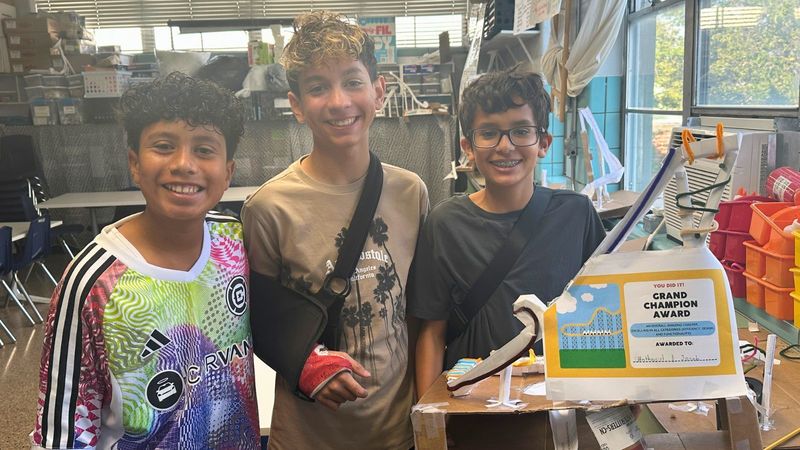
Are you looking for a school that prioritizes hands-on STEM and emotional growth? Or seeking a career move in a supportive environment where you have the freedom to inspire? Explore what makes our community distinctive!