
This is Part 1 in a two-part blog series for Teacher Appreciation Week.
Success is rarely a solo act. Behind every breakthrough, every career, and every newfound confidence is a teacher who saw a spark in a student.
This Teacher Appreciation Week, we are honoring the people who supported the stories we are each living today: our amazing EDUCATORS! There are many stories about how our amazing teachers celebrate learning, deepen impact, and inspire our learners to see the potential in themselves and their peers.
Here are just a few stories around how our incredible teachers are building community within their classrooms and schools to help our students thrive!
Where Structure Creates Excellence in Ms. Chew’s Classroom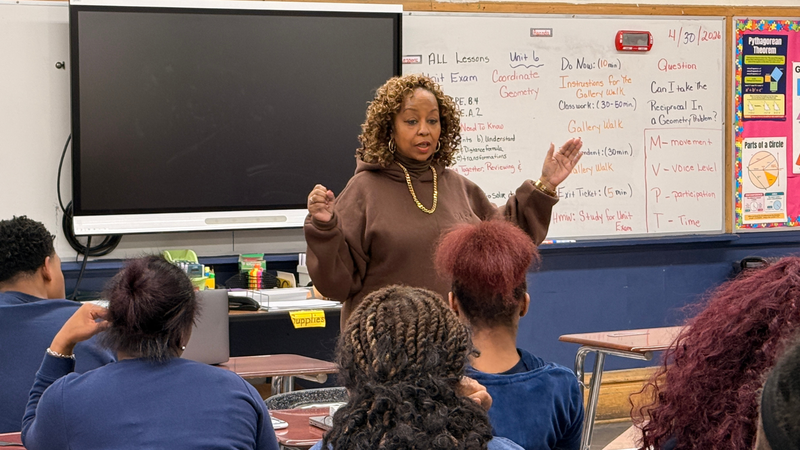
For Phyllis Chew, community is built on a foundation of excellence and mutual respect. After 30 years in education, she has spent the last decade teaching math at CICS Longwood High School because of the family feeling that provides the support she needs to support her students. For Ms. Chew, building a classroom community starts with the environment. This means intentionality is essential in the classroom, everything from arriving early to set up in the morning to being ready with work the moment students step in her room. "Before you can teach, your environment has to be such that learning can be provided," she explains. "I set a standard for myself, and then I set a standard for them." By maintaining firm, consistent standards, she eliminates distractions and creates a sanctuary where students feel supported enough to tackle the challenges of Geometry.
After providing students with the fundamentals, the true magic of Ms. Chew’s classroom happens when she steps back and has her students take the lead. This year, she returned to teaching sophomores for the first time in years and applied this philosophy by demanding a level of structure that has turned a once-challenging dynamic into one that now feels effortless. Her students present their work with pride and use organized binders and dividers to manage their learning. These are the tools that allow for the real heavy lifting to occur, as students unite to problem-solve. "They have enough math knowledge that they can do it themselves and in collaboration with each other," she explains. By modeling excellence and refusing to bend on her expectations, Ms. Chew’s students leave her room knowing how to find resources and ask questions without shame. Watching her students become the lead architects of their own success is a daily affirmation that she is walking in her purpose at the heart of the Longwood community.
The Hand-Off Collaboration Between Kindergarten and First Grade
The transition from Kindergarten to 1st grade at CICS Lloyd Bond is a seamless hand-off between two teams working in lockstep with each other. For educators Krystal Woodson, Robin Williams, Keyona Ross, and Raytoria Richardson-Holiday, strong instruction is rooted in the deep, personal relationships they have built with each other and with their students. By the time a student reaches a new grade, their teacher already knows their story, starting with academic milestones and leading to their personal interests and the specific strategies that help them thrive. "My Kindergarten colleagues are a great resource," Ms. Williams explains. "If I’m struggling with a student, I can ask if there’s anything they’ve done in the past that’s helped." This collaboration allows the team to bridge academic gaps early so that students feel a sense of peace and consistency the moment they walk through the classroom door.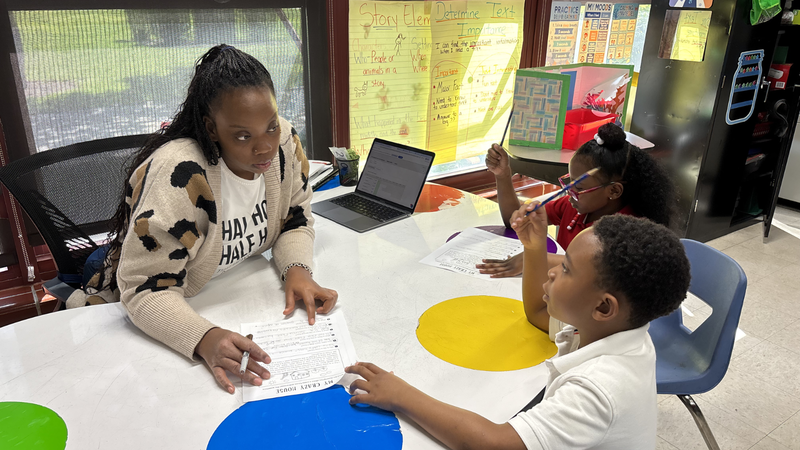
This culture of support extends directly from the teachers to students who are taught that the classroom is a safe space for taking risks. Through a dedicated SEL block and a culture of care approach to accountability, students learn to support one another’s growth rather than pointing out mistakes. "We don’t make fun of people who don’t know the answer—that’s why we come to school!" Ms. Williams shares. This means even the youngest learners take the lead, explaining concepts to their peers in their own words. This is a learned practice in the classroom that is reinforced through teacher collaboration. Weekly team meetings result in alignment on practices and supports to get students where they need to go. Teachers modeling collaboration encourages students to learn to do the same and in turn, creates a cycle where everyone is invested in each other’s success.
Small Wins and Big Dreams for Mr. Larkin’s Students
Jimmy Larkin, special education teacher at CICS Irving Park, knows that for his middle schoolers, the path to academic success starts with a sense of belonging. Whether he is co-teaching in a general education classroom or leading small-group resource time, he focuses on creating a safe space where students feel known before anything else. He often begins his resource time with an easy opening question about their lives to build that foundation of trust. "Having that opening space to share about themselves has helped build their confidence," Mr. Larkin shares. "I want them to have a space where they feel known and see small wins."
One of his most impactful wins this year centered around a student’s attendance. Mr. Larkin noticed the student was struggling to come to school and decided to leverage their relationship to make a deal: “For every day this student attends, they get a check-mark; if they make it four out of five days, they earn a cat sticker of their choice,” he explains. This small ritual moved the student’s attendance from 40% to 75%.
This foundation of community allows true student agency to blossom. Mr. Larkin works closely with his fellow teachers so that his students are seen as leaders in every setting. He remembers the pride he felt hearing that a typically quiet 7th grader had begun raising their hand and taking ownership of their math lessons. "It’s so cool to see them take ownership of their learning and build their confidence," he says. From using color-coded highlighters to help students make visual connections in math to helping 8th graders talk through what comes next in their lives after high school, Mr. Larkin illustrates that when a student feels safe and supported, they can gain the confidence to lead their own educational journeys.
A Full Circle Moment for Ms. Gates and Mr. Alexander
Sheryl Gates has been a teacher at CICS Longwood Elementary for over 20 years, and sees her school as a family tree that grows and strengthens over time. One shining example is her relationship with Robert Alexander, a former student in her classroom who now walks the same halls as her colleague! When she found out Mr. Alexander was joining the Longwood staff, she was happily surprised: "By being a student at Longwood then teaching at Longwood, it can inspire other kids. It feels really good that they come back to work here and remember a familiar face; it shows consistency.”
This cycle of mentorship has played a primary role in Ms. Gates’ entire career, from Kindergarten teacher to librarian and now to technology teacher. Her impact spans generations; she recently taught an eighth-grader whose mother was once her student! This deep-rooted history allows her to build a consistent, comfortable community where students feel safe enough to find their voices. Whether it is a shy student becoming a confident reader or Mr. Alexander stopping by her door to tell students, "Hey, she was my teacher, treat her well!," Ms. Gates’ legacy is defined by the comfort of being known. She is proof that a teacher’s impact can create a home that students and future educators want to return to for a lifetime.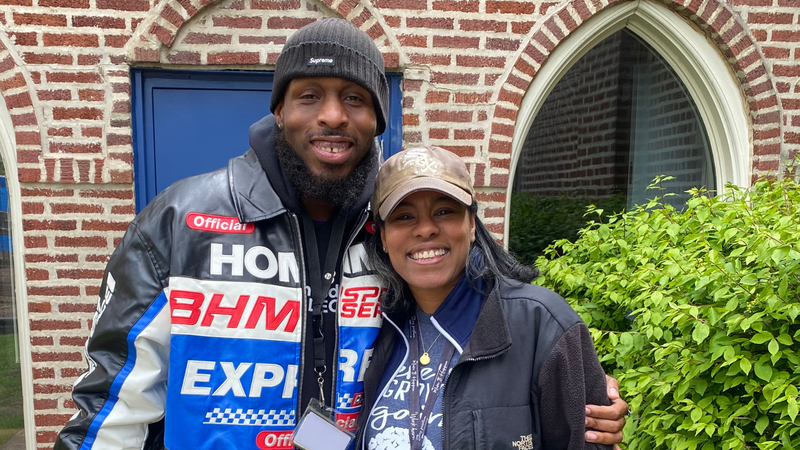
Growing “Good Humans” in Ms. Serrano’s Classroom
For the 8th graders at CICS West Belden, the story of their middle school journey is inseparable from the mentorship of Angela Serrano. Having looped with this class since 6th grade, Ms. Serrano works to create a cohesive, compassionate community. The secret lies in a blend of her consistency and a deep personal rapport she’s developed with each of them. By setting clear routines and explaining the "why" behind them, Ms. Serrano’s environment is a place where students understand exactly what is expected of them.
The true measure of this community’s success is the way Ms. Serrano is helping shape them into “good humans.” This year, she has seen her hard work play out as students rallied for a classmate with a disability to be included in every activity, and advocated to have them added to the 8th-grade superlatives list. This culture of kindness is a direct result of Ms. Serrano’s philosophy that teaching life skills requires knowing the person behind the desk. "My goal is by the end of September, I want to know at least one non-academic fact about them," she explains. "How do I get to teach you life skills if I don’t know you personally?"
Her heart-first approach is exactly what Ms. Serrano is now passing on to the next generation of educators through her work with her AUSL resident. Modeling how to balance high academic expectations with a genuine interest in her students as people is helping her resident understand that the best learning happens when everyone feels seen. 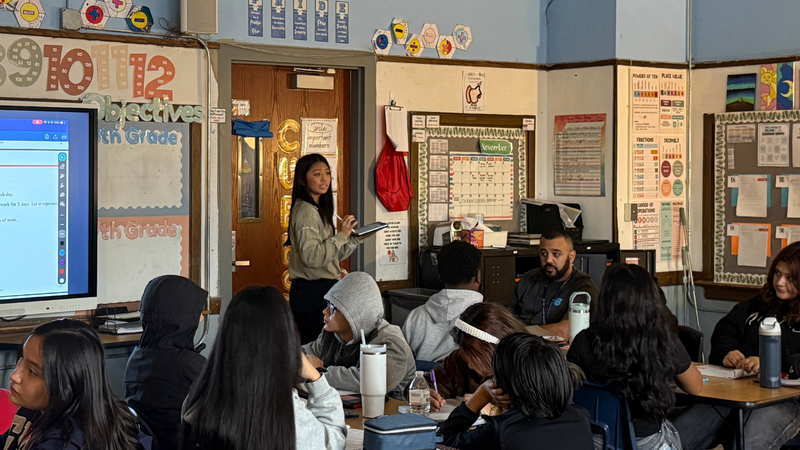
Everyone has a story to tell, and we are excited to celebrate the inspirational people who helped shape them. Thank you to all of our Distinctive teachers and educators for helping the future great stories write their opening chapters.
You can help us celebrate all of our Distinctive Schools teachers this week! Share student and family stories on social media about our inspirational teachers, and don’t forget to tag your school and Distinctive Schools!