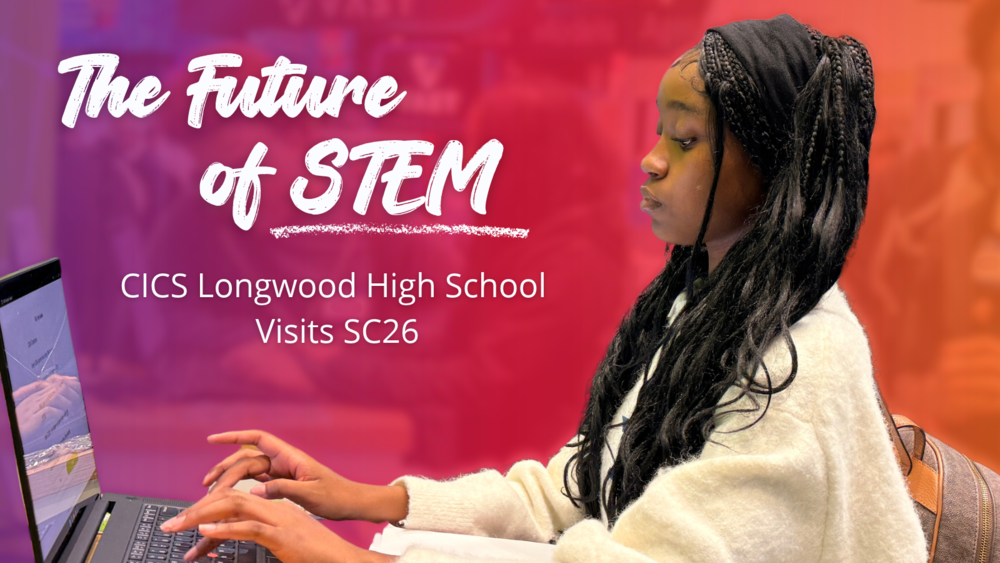
It is not uncommon to hear students say that STEM (science, technology, engineering, and mathematics) can feel intimidating or out of reach. A part of shifting STEM’s narrative comes from identifying how it is fundamentally behind everything students interact with every day, from video games and generative AI tools to their smartphones, as a practical way to solve real-world problems.
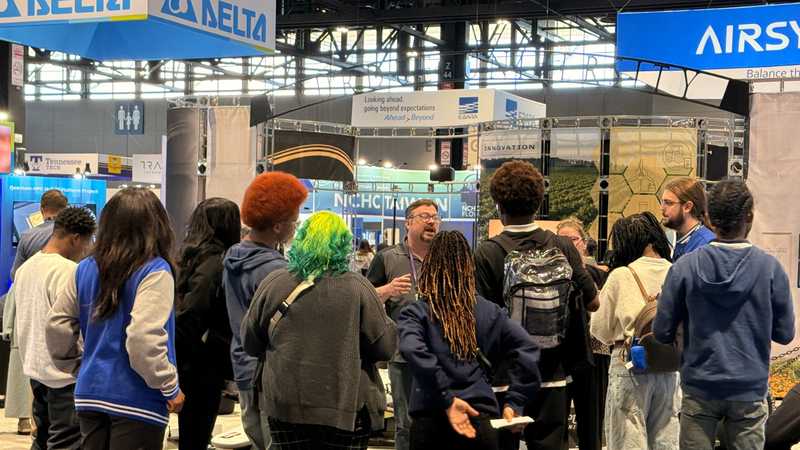
When the International Conference for High Performance Computing, Networking, Storage, and Analysis (SC26) brought its nearly 40-year-old supercomputing conference to Chicago, it presented a unique opportunity to introduce students to hands-on experience of cutting-edge technology. Out of 20,000 global attendees, including top researchers, companies, and vendors in AI, computing, and tech communications, our CICS Longwood High School students were the only high schoolers with an exclusive curated experience in attendance.
The day began with an orientation on supercomputers—machines 100 times faster than a standard PC, capable of powering weather and space simulations, protein folding, and DNA sequencing. Before stepping into the expansive exhibit hall, students were given key advice to guide their exploration: Think about the people behind the technology and the real-world problems they are solving.
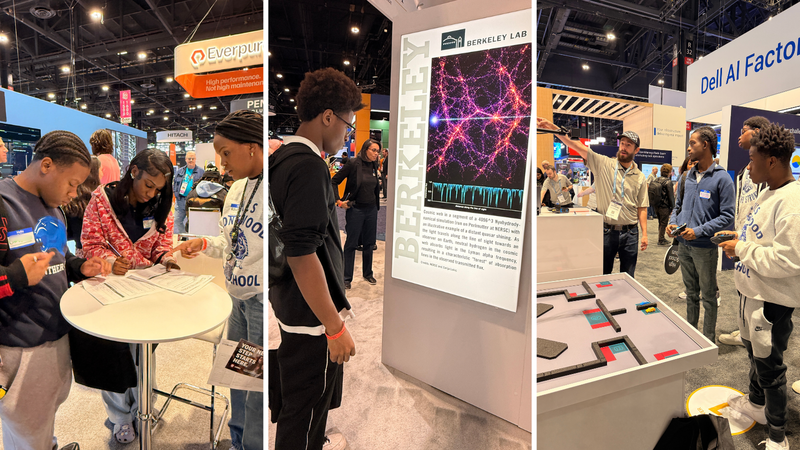
Equipped with questions and ready to learn, our students explored interactive exhibits and met with representatives from top institutions and organizations, including Purdue University, Indiana University, Texas Advanced Computing Center, Dell Technologies, Nvidia Corporation, and the U.S. Department of Energy.
Alanzo, one student aspiring to become a software engineer and game developer, attended with a clear mission to figure out how to prepare for his career path starting right in high school: "I wanted to figure out how to improve myself so that I can get to where I want to go," he explained, adding that he was eager to ask professionals directly what steps he should be taking now to reach his goals. A representative from Indiana University offered advice to identify interest areas, reach out to professionals in those fields, read widely, and build strong reading and writing habits early in high school.
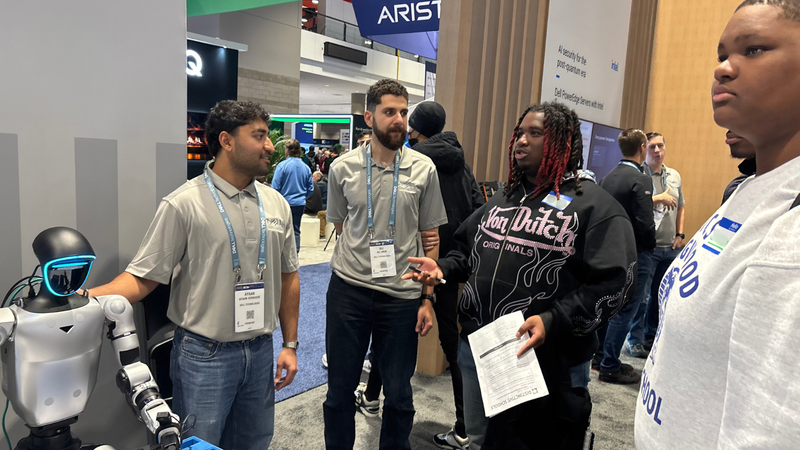
As students explored the exhibit floor, they learned about AI-powered racecars, interacted with a humanoid robot, and learned about national supercomputing infrastructure power research across the country. “The day was amazing—our students got to see something beyond the scope of high school,” reflected Renee Long, Academy Coordinator for CICS Longwood High School. “Hearing students say things like, ‘I have never been in a building this size,’ and ‘do we have to leave? We didn’t get to see everything,’ tells me just how important it is to provide students with opportunities like this. They got to be in the same room as all of these organizations they recognize, and see all the possibilities for their future.”
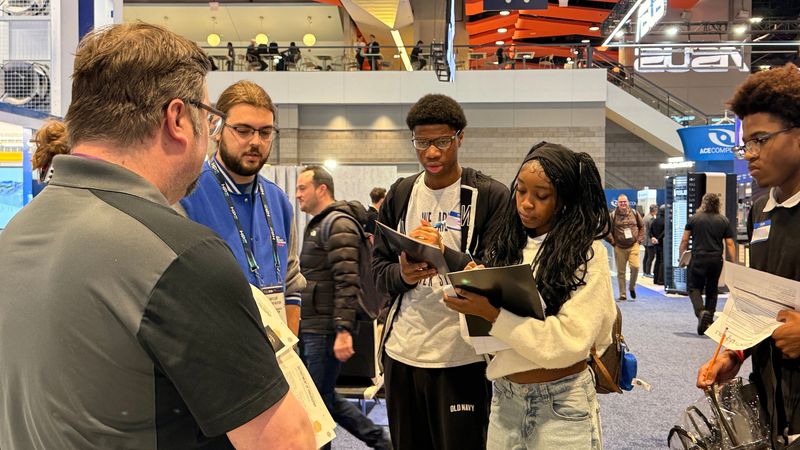
For Aniya, seeing tech in action made all the difference. “I got to learn more than I would learn just from books because I’m a more visual learner,” she shared. “I have to see what I’m learning to better understand it, so as we were walking around the exhibit hall, I got to see supercomputers and technology up close, and we got to play games created by AI,” creating an interactive way for her to better grasp technical concepts.
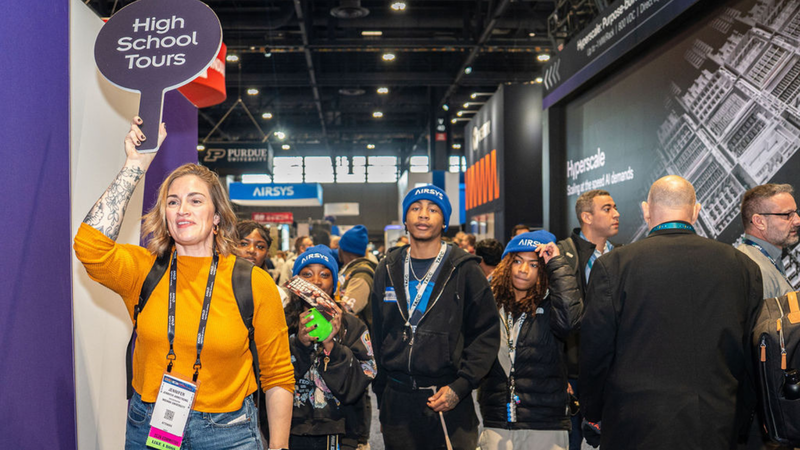
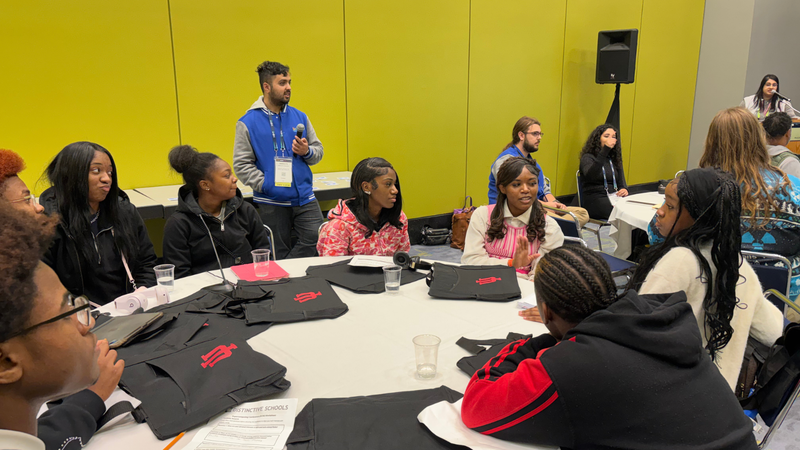
When students reconvened for lunch, students were excited to share their discoveries and insights. Their conversations highlighted the profound implications of technology on both the present and the future, touching on the opportunities and ethical challenges of artificial intelligence, as well as the essential skills to cultivate during high school. Reflecting on the diverse background of professionals they met, one student said, “I learned that you don’t need to know computers or technology to work in this field because companies want people with real-world experiences to help solve real-world problems.” The depth of their engagement and critical thinking really came to light when a student asked a question that resonated with everyone in the room: “Do you believe AI is good for the future?” The discussion demonstrated how the experience helped students to move beyond simple curiosity and think critically about the powerful role technology will play in shaping their own futures.
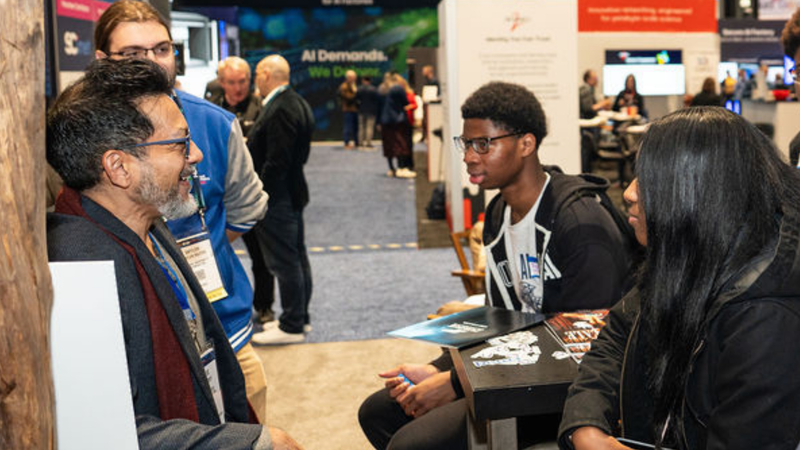
Whether seeing new possibilities for what happens after high school or thinking more critically about the world around them, CICS Longwood High School students left SC26 with a newfound confidence in their ability to shape their future with STEM knowledge and tools.